Different learners, not different schools
Pluralism belongs inside our schools, not between them.

One of the most unhelpful habits we have in education is our tendency to turn false binaries into structures.
Traditional or progressive. Knowledge or skills. Academic or vocational. Teacher-led or student-centred. Rigour or wellbeing. Structure or agency. Explicit teaching or inquiry. And eventually, one kind of school or another.
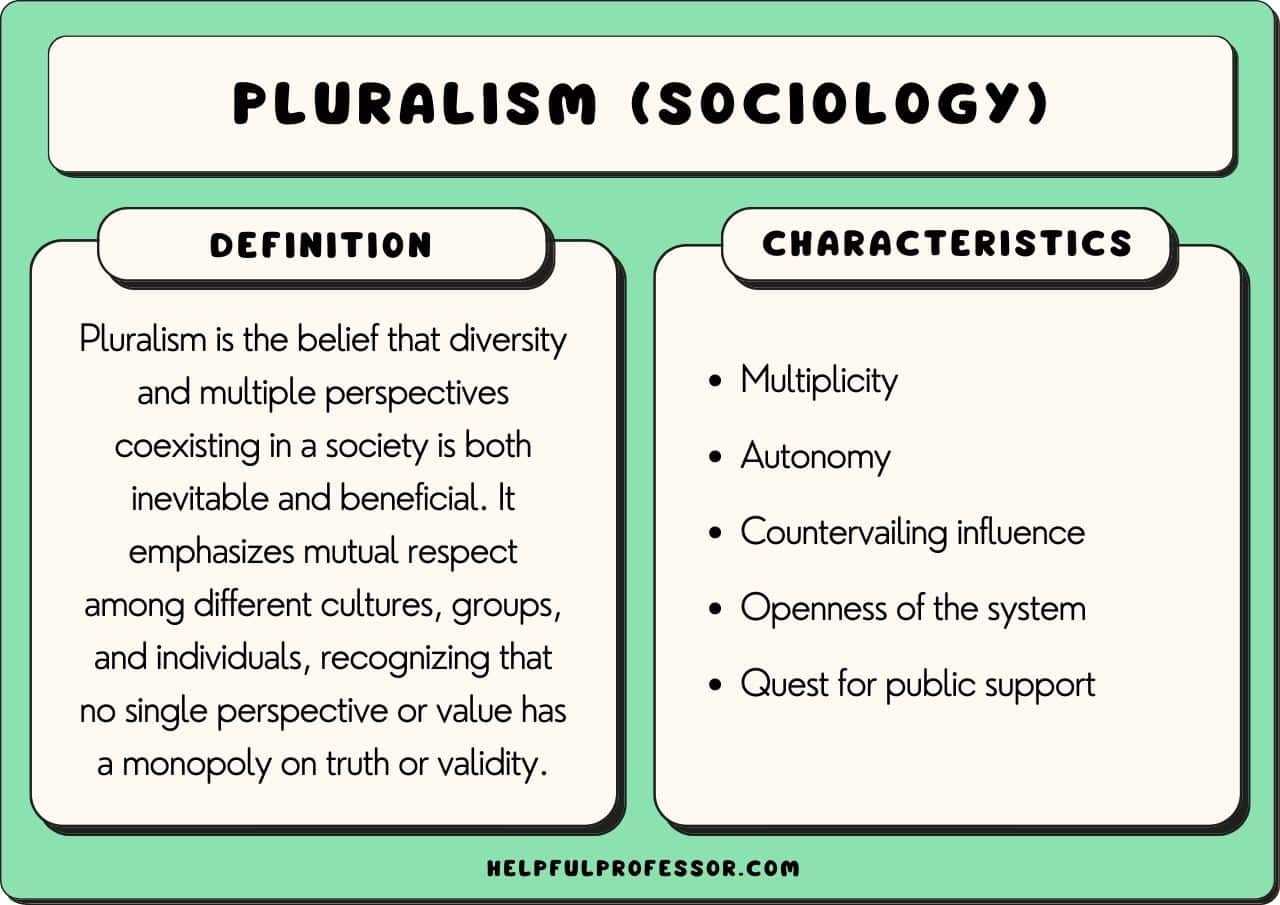
I have been thinking a lot about pluralism lately. Not pluralism as simply having lots of different schools to choose from, but pluralism as the idea that our public education system should be capable of holding difference within it. Because our young people are different.
They have different strengths, different interests, different aspirations, different cultures, different identities, different learning needs and different ideas about what success might look like.
The answer to that diversity shouldn’t be to keep designing different schools for different imagined categories of children.
The answer should be to design every school well enough to meet them all.
That doesn’t mean every school should look the same. Quite the opposite. Schools should absolutely reflect their communities, their histories, their learners and their context. But I am increasingly uncomfortable with the idea that within one local community we might need an “academic” school over here, a “progressive” school over there, perhaps a “traditional” school down the road and a “trades” school somewhere else - that isn’t pluralism, that, my friends, is a freakin’ sorting hat.
For me, Universal Design for Learning offers a useful way of thinking about the alternative. Start with the assumption that learner variability is normal, not exceptional. Build a strong core that is accessible to as many learners as possible. Provide multiple ways for young people to engage, make sense of ideas and demonstrate what they know. Scaffold where scaffolding is needed and extend where extension is needed.
Importantly, none of that requires us to abandon knowledge. I am increasingly convinced that we need to find the measured middle ground that education debates seem determined to avoid.
I have no problem with a curriculum being described as knowledge-rich if what we mean is that teachers and students deserve absolute clarity about the important disciplinary knowledge, threshold concepts, capabilities and skills that should be taught. I have no problem with clear sequencing. I have no problem with teachers knowing what students should have encountered before they arrive in their classroom and where the learning needs to go next. In fact, I think that kind of clarity can be incredibly powerful.
But in Aotearoa New Zealand, the knowledge we choose can never be eurocentric, nor can it be culturally neutral. It must be grounded in who we are, our bicultural foundations and our responsibilities under Te Tiriti o Waitangi. It must make space for mātauranga Māori, for the histories and knowledge of this place and for the many communities who now call Aotearoa home.
And once we have clarity about what matters, teachers need professional space to decide how best to bring that curriculum alive for the young people sitting in front of them.
National entitlement. Local contextualisation.
Knowledge and capability.
Explicit teaching and rich application.
Structure and agency.
These things are not in opposition to each other, that are, in fact, what makes an effective whole.
Which is why I want to acknowledge something positive in the current reform programme.
I have been genuinely encouraged by much of what I have seen emerging from the Phase 5 Years 11–13 curriculum work led by Dr Catherine Law and the huge team of local subject advisers and reviewers working alongside her.
For the first time in a long time, it feels as though we are having a serious conversation about curriculum before assessment.
The draft Phase 5 curriculum has been developed subject by subject, with explicit attention to knowledge, capabilities, practices, pathways, subject structure and teaching sequence. The Ministry says the work has deliberately begun with disciplinary knowledge, concepts, practices and capabilities rather than working backwards from existing NCEA standards. It also states that the curriculum has been contextualised for Aotearoa New Zealand, integrating Te Tiriti principles, bicultural heritage and local examples. (New Zealand Curriculum)
For too long, assessment has had an unfortunate habit of becoming the curriculum. We ask what standard we are doing rather than what we are learning. We construct courses around assessment opportunities rather than beginning with the body of knowledge and capabilities we actually believe young people should develop. Phase 5 has the potential to reset that relationship.
The drafts are detailed. There is clear progression. There is greater specificity about what should be taught. But crucially, the Ministry also explicitly provides opportunities for teachers to use local, national and global contexts to illuminate that knowledge. That feels much closer to the middle ground I for one have been looking for. And what I have always enjoyed about both Dr Nina Hood’s thinking here and Taylor Hughson’s and Phillip Poulton’s thinking here.
Tell us clearly what matters. Give teachers excellent curriculum resources and professional learning. Set ambitious expectations. Then trust skilled professionals to design learning that makes sense for their young people and their communities.
I am much less convinced by where assessment appears to be heading.
The finalised qualification design currently states that every subject will contain coursework and at least one exam, with most students completing three to four assessments in each subject each year. (Tāhūrangi)
This is where I think the desire for coherence risks tipping over into unnecessary uniformity.
Just because you can create an exam for a subject doesn’t mean you should.
Different disciplines produce and demonstrate knowledge differently. A musician, designer, journalist, technologist, actor, programmer, scientist and historian do not necessarily demonstrate disciplinary expertise in the same way.
Assessment should be valid before it is uniform. I talk more about that idea in the post linked below.
https://aecnz.substack.com/cp/202054283
Curriculum coherence does not require assessment uniformity.
If we genuinely believe in disciplinary knowledge then surely we should also believe in disciplinary forms of assessment. The question should not be, “How do we make sure every subject has an exam?” It should be, “What is the most valid, rigorous and authentic way for a student to demonstrate mastery in this particular discipline?” Those are very different questions.
The same principle applies to another part of the current reform programme that I think has enormous potential: the new Industry Skills Board subjects.
Nine industry-led subjects have now been announced for Years 12 and 13 from 2029. They are intended to have parity with more traditional subjects and contribute to the same secondary qualifications. (The Beehive)
And there is some genuinely exciting thinking here:
Applied Intelligent Systems will involve students using low-code and no-code technologies to design, deploy and evaluate AI-enabled workflows and agents to solve real business challenges.
Construction and Built Environment will explore construction materials, systems and practices, with students analysing safe, sustainable and effective building outcomes.
Energy and Infrastructure will bring together energy, water, infrastructure and extractive systems, applying STEM knowledge and systems thinking to issues such as resource use and infrastructure resilience.
Engineering Technology will focus on engineering systems, materials and technologies, with students testing and improving solutions across contexts including automotive, aviation, logistics, rail, ports, maritime and public transport.
Food and Fibre Systems will examine food and fibre as an interconnected system, including sustainable management of natural resources, value creation and the trade-offs involved in real-world decisions.
Health Services and Care will introduce students to health and wellbeing systems while developing practical skills for safe, ethical and culturally responsive care across health, disability, aged care, mental health and community services.
Hospitality Food and Beverage will combine culinary knowledge with food and beverage systems, operations and business in contemporary hospitality settings.
Next-Gen Manufacturing will explore modern manufacturing systems and technologies, combining practical and digital skills to design, produce, improve and evaluate products and processes.
Tourism will examine tourism as an interconnected system of people, places, businesses, environments and policy, including visitor experience, sustainability, digital innovation, destination management and business leadership. (The Beehive)
There is a lot to like there.Although I am not sure these subjects can really be framed as “new” as many feel mighty familiar. That said, the descriptors are promising. But the success of these subjects will depend entirely on what happens next.
They will need specialist teachers. Equipment. Facilities. Industry connections. Professional learning. Curriculum resources. Assessment support. In some cases transport, specialist spaces and access to workplaces.
If these subjects are genuinely going to have parity of esteem, then they must also have parity of access.
It is not enough to say that these opportunities exist somewhere in the system.
A young person in Northland, South Auckland, the West Coast or rural Southland should have the same entitlement to high-quality industry learning as a student attending a large, well-resourced metropolitan school.
And I want something else made very clear.
I want assurance that schools will be supported to offer a meaningful combination of specialist curriculum subjects and industry-led subjects.
The Government itself says students should be able to combine academic and industry-based learning within a single qualification. (Tāhūrangi)
Good. Because the last thing we should do is create another binary.
Academic schools over here, vocational schools over there. University-bound students in one place, trades students somewhere else. That would be a profound backwards step.
A young person interested in engineering might need Physics, Calculus, Engineering Technology and an Impact Project building an electric vehicle. A future nurse might benefit from Biology, Health Services and Care, Statistics and Psychology. An aspiring entrepreneur might combine Economics, Applied Intelligent Systems, English and Next-Gen Manufacturing. A future filmmaker might study English, Media, Journalism and Communications, Drama and Tourism.
Why would we want to separate those worlds? The whole point should be to bring them together.
And that brings me back to why I have been thinking about pluralism in the first place.
In recent weeks I have found myself reflecting deeply on questions about whether Albany Senior High School meets the needs of every learner in our community.
Sometimes our differences seem to make people nervous.
We don’t have a school uniform.
Every Wednesday our students undertake Impact Projects.
We deliberately create opportunities for increasing independence.
We are a senior-only school, so everything from our timetable to our pastoral systems, curriculum, careers education and learning environment has been designed specifically around the age and stage of young people in Years 11, 12 and 13.
Some people describe that as “progressive”. I am never quite sure what that means.
Because beneath those visible differences sits something far less fashionable and far more important: a relentless focus on designing a school around the developmental and educational needs of senior secondary learners.
Different doesn’t mean niche. And different certainly doesn’t mean that we are designed for fewer kinds of students.
Recently I read a comment suggesting that Albany Senior High School was particularly good for LGBTQI+ young people and students with additional learning needs.
I am sure it was intended as a compliment.
And to be absolutely clear, I am incredibly proud if LGBTQI+ young people, neurodiverse young people, disabled young people and those who have struggled to feel that they fit the traditional mould of schooling walk through our doors and feel that they belong.
I want them to feel that deeply.
But I was unsettled by what can sit underneath that compliment. Because inclusion should never become a niche market position.
Being really good at supporting young people who have sometimes felt marginalised by schooling does not mean you are somehow less capable of supporting the student aiming for Scholarship, an Excellence endorsement or entry into a highly competitive university course.
Quite the opposite, because good design can and does benefit everyone.
At Albany Senior High School we talk about Be here. Be you. Belong.
We mean it. Every young person should be able to arrive as themselves and know that this is their school too.
We have another mantra that has been with us for many years:
It’s not if you’re bright, it’s how you’re bright.
That statement matters because it rejects the idea that intelligence comes in one form or that success has one pathway.
But please don’t mistake that for a lack of academic ambition.
Albany Senior High School is absolutely designed to support highly academic students. We support students to achieve Excellence in NCEA. We support students pursuing NZ Scholarship. We offer the traditional academic disciplines students need for demanding tertiary pathways.
And then we offer them more.
We deliberately carve out time for Tutorial because I don’t believe academic success comes only from adding another subject.
Students receive academic coaching. They develop executive functioning skills. They set goals and track their progress. They learn about civics. They undertake learning about artificial intelligence and how to use it critically and ethically. They explore careers and future pathways. They receive outstanding support from Craig Dyson and our Careers and Pathways team as they prepare for university, further training and the world of work.
And every Wednesday they have Impact Projects, where learning connects with interests, passions, community, industry and the real world.
None of that makes the school less academic.
It makes our definition of preparation for adulthood bigger than academic achievement alone.
We are a relatively unusual school because as a standalone senior school we have been specifically designed around the final three years of secondary education. We don’t need to organise ourselves around the needs of Year 7s, 8s or 9s as well as Year 13s. We can ask a very particular question:
What do young people need in the final years before they step into university, training, employment and adulthood?
For more than 17 years we have continued to refine our answer. Of course we should keep questioning ourselves. We pride ourselves on yet another mantra. We will always be a new school.
Of course we should keep improving. Of course we should listen when students and whānau tell us something isn’t working.
But the fact that our answer looks different from the high school someone attended 20 or 30 years ago is not evidence that it is somehow less capable of meeting the needs of every learner.
It is evidence that it has been designed for a particular age and stage. There is an important distinction here. I am not arguing that every school should be identical, rather I am arguing almost the exact opposite. I am arguing that every school should be pluralistic.
Every school should contain rigour and creativity; knowledge and application; academic and vocational pathways; explicit teaching and inquiry; structure and agency; extension and support; individual aspiration and collective responsibility. Students heading for medicine and students heading for apprenticeships. Students who know exactly where they are going and students who are still figuring it out. Students who have always loved school and students who need us to help them rediscover why learning might matter.
Every school should be THE school for:
Rainbow students.
Neurodiverse students.
Athletes.
Artists.
Scientists.
Entrepreneurs.
Introverts.
Extroverts.
Young people who want certainty and young people who want possibility.
That is what a public school should be. Not a school for a particular kind of kid. An effective school capable of responding to all kinds of kids.
Wouldn’t it be great if ERO had a colour coded bar graph for that, and that only.
This is why I worry whenever we start talking as if diversity requires competing styles of schools within the same community. If one school is “academic”, what does that say about the other? If one is “traditional”, what does that make the other? If one is “vocational”, where do the university-bound students go?
If one is supposedly best for neurodiverse or rainbow young people, what exactly are we saying about whether those same young people belong everywhere else?
These labels can become self-fulfilling, and ultimately they let us off the hook. And quite frankly, that is NOT good enough.
Because the obligation of every school leader should be much harder than choosing a niche. Our job is to build schools capable of containing multitudes.
The future of education shouldn’t be about choosing between knowledge and skills, academic and vocational, traditional and progressive or structure and agency. It should be about refusing those binaries in the first place.
Give us a coherent, ambitious national curriculum grounded firmly in Aotearoa New Zealand.
Give us clear knowledge, concepts, progressions and expectations.
Honour Te Tiriti.
Resource teachers properly.
Design assessment that actually fits the discipline rather than forcing every discipline into the same assessment mould.
Fund industry learning so it is genuinely available to every community.
Then give schools and teachers enough trust and professional space to bring all of that alive for the gloriously diverse young people who walk through our doors.
Because pluralism should not require different schools for different kinds of children.
It should require every school to get much, much better at embracing difference.
Different learners.
Different strengths.
Different aspirations.
Different pathways.
One community.
We shouldn’t need different schools for different kinds of students. All we need are schools designed to ensure every last one of them belongs…exactly as they are.
This is a great read and really encouraging. I thought the same thing when the new subjects were announced - some of these sound familiar or have always been available. The resourcing was just often difficult and getting expertise in front of students challenging. I worry that what’s coming may look like contracts with industries instead of teaching. But I’m ever hopeful.
Love your philosophy Claire. Oh please, would you offer intermediate by 2028! ;)